
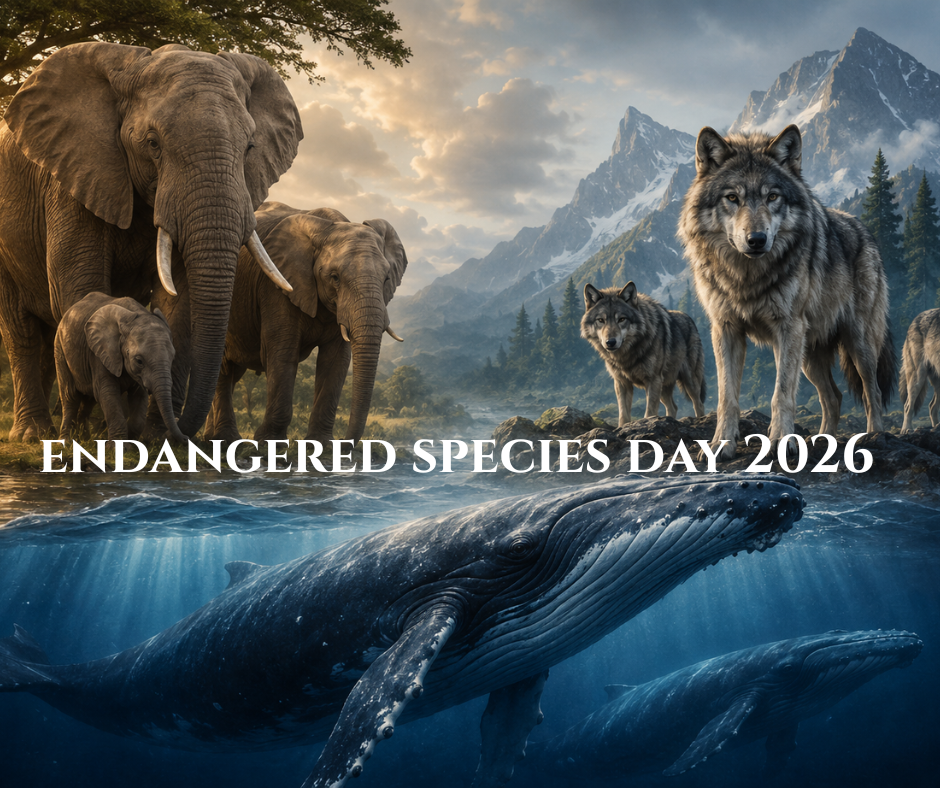
Celebrating endangered species around the world.
Wildlife do far more than simply exist alongside us—they help sustain life on Earth itself. Some species play such vital roles in maintaining healthy ecosystems that they are known as keystone species.
And many of them are endangered:
Elephants. Whales. Wolves.
Elephants are known as the gardeners of the forest.
As they move through their habitats, they disperse seeds and help regenerate forests—ecosystems that store carbon, support biodiversity, and contribute to the air we breathe.
Whales help fertilize the ocean.
When they rise to the surface, they cycle nutrients that feed microscopic plant life responsible for producing nearly half the oxygen we breathe.
Which means every second breath you take may be connected to a whale.
And wolves?
When wolves were reintroduced to Yellowstone in 1996, entire ecosystems began to recover.
Elk changed their grazing patterns.
Vegetation returned.
Beavers came back.
Wetlands stabilized.
Bird populations increased.
Even the rivers changed shape.
For millions of years, wildlife have helped shape, regulate, and stabilize the living world around us.
This is how deeply interconnected life truly is.
Every species plays a role, and when even one piece is removed, the entire system begins to shift—often in ways we cannot immediately see.
Humans are not separate from nature.
We are one part of a vast living system shared with all life on Earth.
Protecting endangered species is not just about protecting wildlife—
it is about protecting the balance, relationships, and living systems that sustain us all.
